
War Etiquette
March 31st Planting & Stocks Report Comments

“Judge me, O Lord, and favor my cause.”
-Henry Tudor (Henry VII), the Battle of Bosworth
Every trader is superstitious. The Market Gods are fickle and punishing. We all have that subconscious routine on report days, and an inevitable tendency to favor the side of the market where we scored our first big wins. We acknowledge that we cannot influence the market, yet we never miss a chance to try.
The story of Henry Tudor is a remarkable one, marked by the sheer audacity required to take the crown despite being outnumbered, outgunned, and not even of true lineage. Yet, on that fateful morning at Bosworth, he uttered the words: “Judge me, O Lord, and favor my cause.” He then spent the next three decades laboring to establish a dynasty.
This shall be our report day rallying cry.
This was a scenario we outlined in our preview “IOUs” that could put traders and buyers in a tough spot. We expected that whether the report was bearish or bullish, corn would get bought. Perhaps the war ends and we see a few days of weakness—I suppose we cannot rule this out.
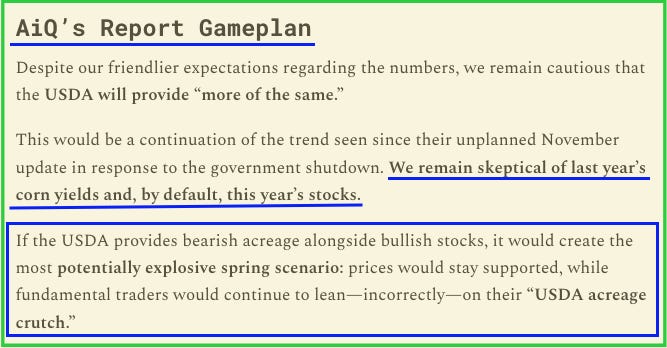
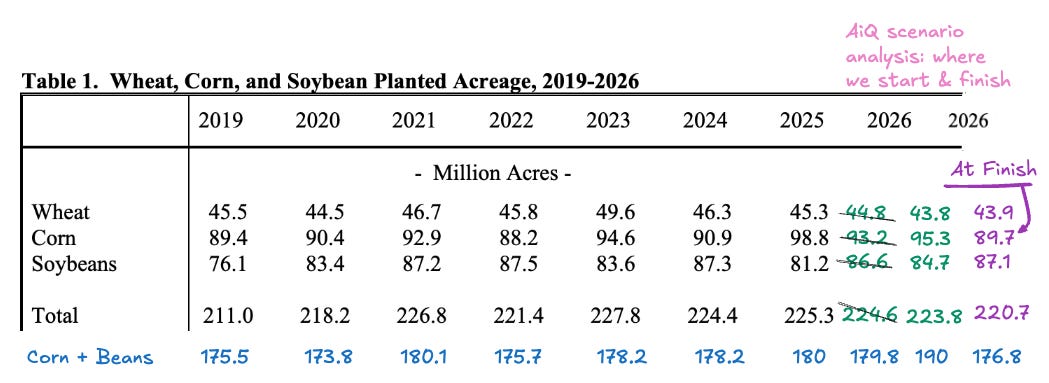
Before we dive into the report thoughts, let’s take a quick look at methanol as one example of why none of this is as simple as “they will plant — they won’t plant” or “they will (or won’t) turn all the vegetable oils into fuel.”
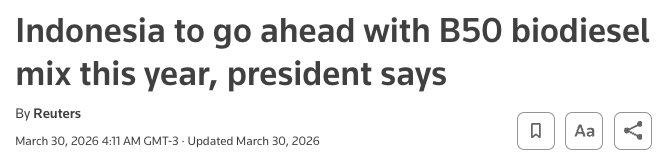
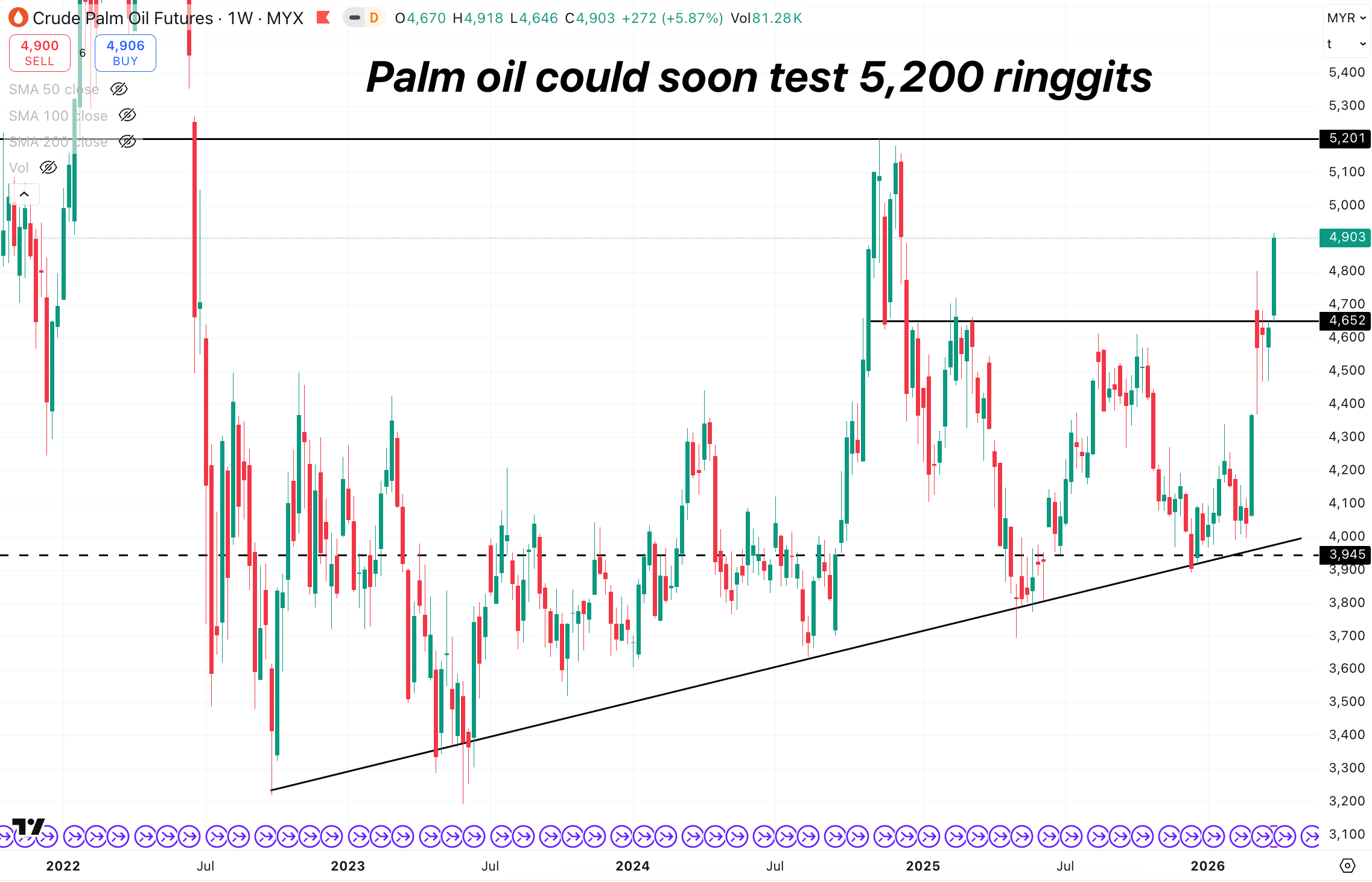
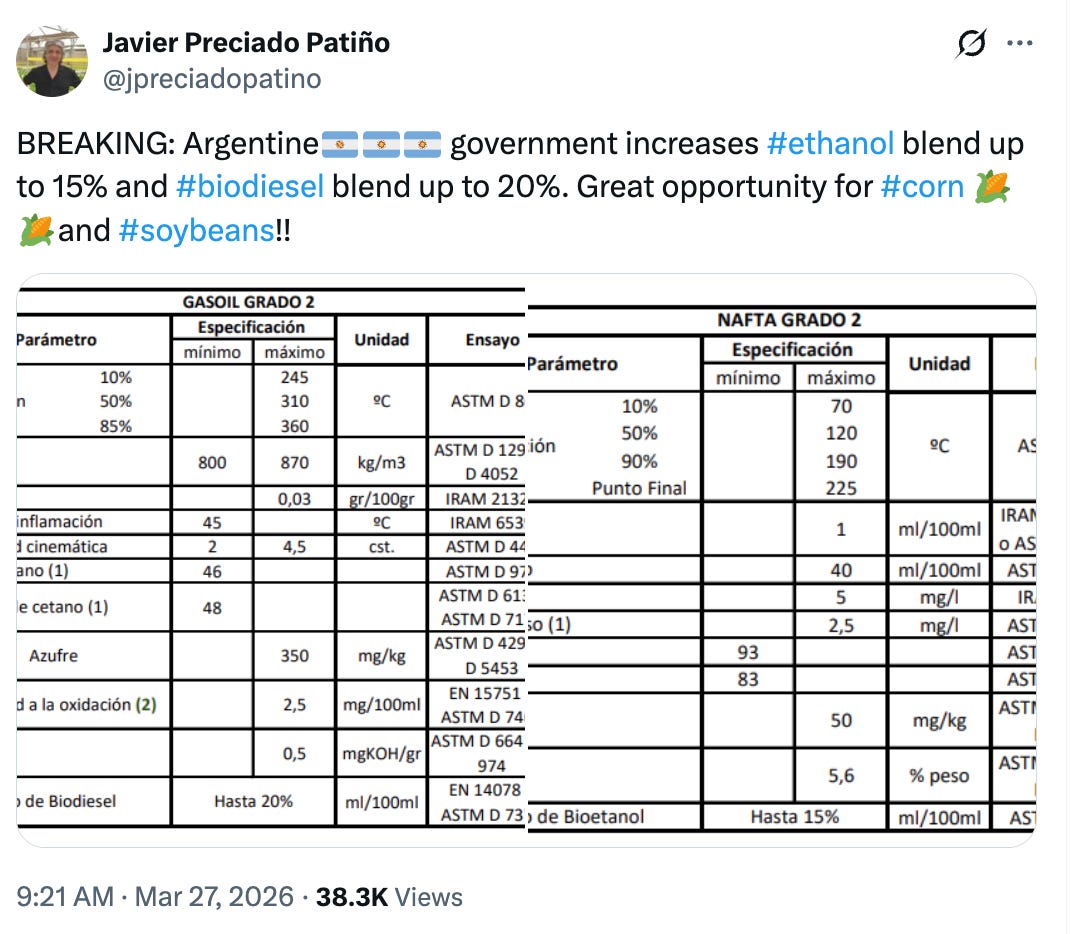
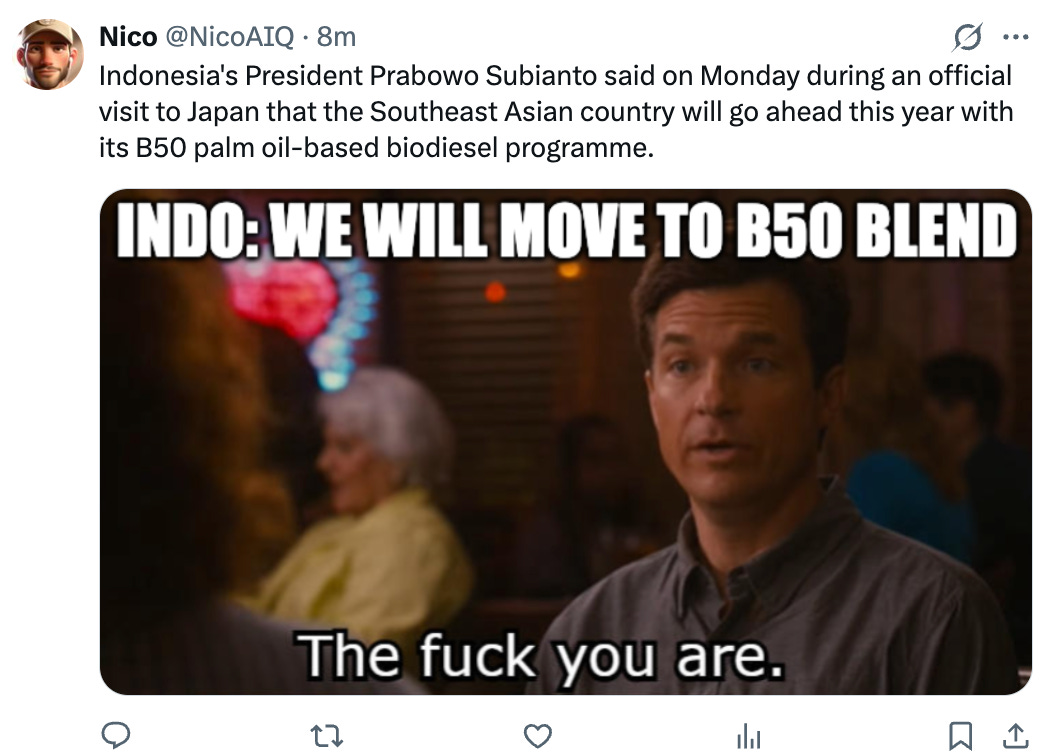
Look at the strength in palm oil after the B50 announcement; Argentina’s cash bean oil at 1,600 under should follow next. It’s a no-brainer. The markets will rally on biofuel economics and the disruptions in the Strait of Hormuz (SoH).
Methyl Ester, Another Word for Biodiesel
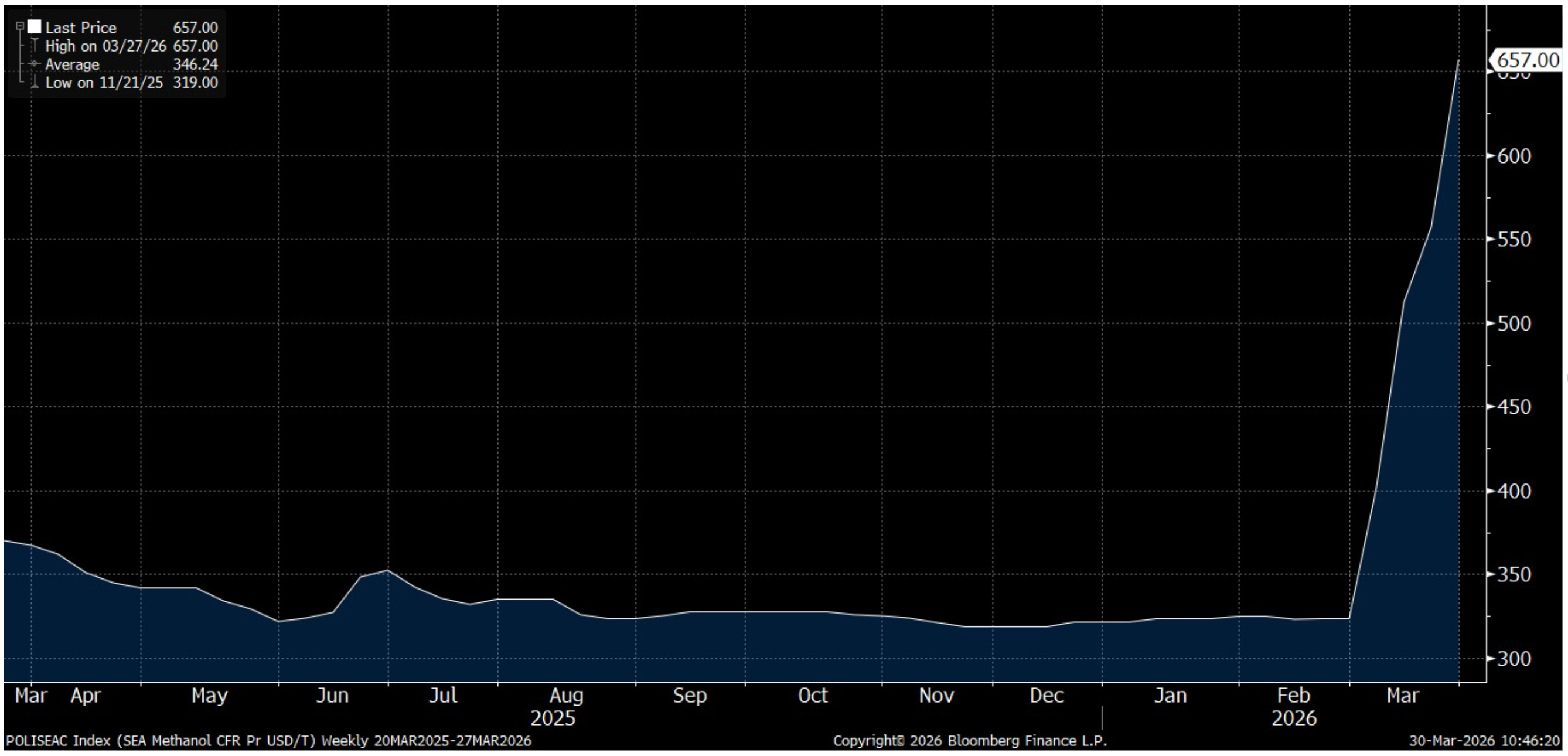
The price of methanol has soared >100% since early March. Have you ever wondered what methanol is used for? Where does it come from? What priority would it get if there weren’t enough?
Formaldehyde Production (The Heavyweight): This is the single largest use (approx. 30–40% of global demand). It is the base for resins used in plywood, particle board, and adhesives. If this stops, the construction and furniture industries freeze.
Methanol-to-Olefins (MTO): A massive driver in China. Methanol is converted into ethylene and propylene, which are the building blocks for nearly all modern plastics (PE, PP), synthetic rubber, and fibers.
Acetic Acid: Used to produce vinyl acetate monomer (VAM) and PET plastics (think water bottles and polyester clothing). It’s also the key ingredient for industrial solvents and paints.
MTBE (Fuel Additive): Used as an oxygenate in gasoline to raise the octane level and help fuel burn cleaner. While phased out in parts of the U.S., it remains a massive market in Asia and the Middle East.
Direct Fuel Blending: Used in high-level blends (like M85) or as a gasoline substitute. It has a high octane rating (100+), making it a favorite for racing and increasingly for domestic transport in China.
Biodiesel Production: Methanol is the “catalyst” used in transesterification to turn vegetable oils or animal fats into biodiesel (FAME). No methanol = no “green” diesel.
Marine Fuel: The fastest-growing segment in 2026. Global shipping giants (like Maersk) are retrofitting fleets to run on methanol to bypass sulfur and carbon regulations.
Wastewater Treatment: Used in the denitrification process. Bacteria “eat” the methanol to convert harmful nitrates into harmless nitrogen gas before water is released back into the environment.
Methanol is not "refined" from crude oil; it is synthesized from Synthesis Gas (Syngas). Because the gas fields (like South Pars) are also under kinetic threat, the production isn't just "blocked"—it’s physically stopping due to feedstock loss.
It can also be produced from coal through coal gasification. Most countries, aside from China, no longer do this.
China uses coal for 75% of its domestic production. However, China is also the world's largest importer of methanol to feed its MTO (Methanol-to-Olefins) plants. They rely on the Strait for 70% of their imports.
Hormuz Dependency: 90% of Middle Eastern methanol capacity (approx. 24 MMT) is located in ports that require transit through the Strait of Hormuz. That’s 17% of all methanol produced worldwide.
Iran’s Dominance: Iran is the world’s largest methanol exporter. Its capacity is 17.4 MMT/year, which accounts for 23% of global capacity (excluding China). Nearly 100% of this is on the wrong side of the Strait. The current disruption removes roughly one-third of all seaborne methanol from the global market.
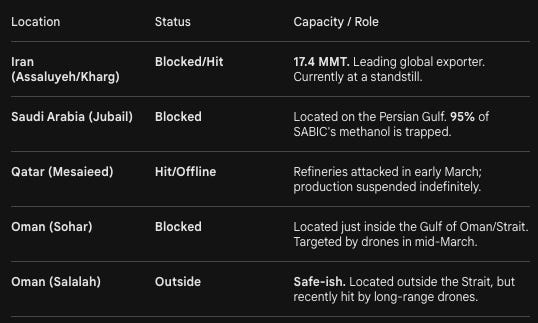
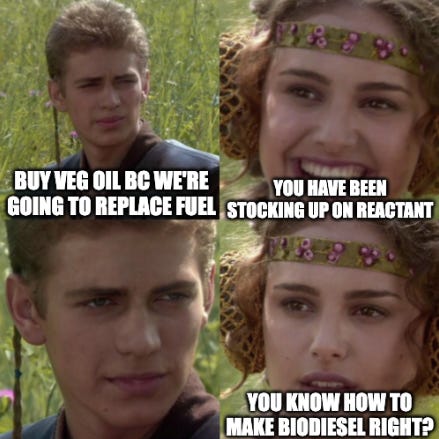
About that whole unlimited biofuel thesis…
Now let’s get into the report, and why we continue to love our “shotgun approach.”
