

"Magic is two things: it is a science and it is an art... but magic is also a cheat. It alters the rules by which God made the world, and there is always a price for that.”
— Susanna Clarke (Jonathan Strange & Mr Norrell)
That was fun. I’m in a spicy mood, and quite excited. Commodity trading is setting up for fantastic 2H 2026, and ags might finally decide to tag along.
I’m thrilled with the report and setup going forward. This level of f&$kery gives the discretionary guys with experience and objective models some edge over the systematic crowd pounding wheat, just like cotton before, each morning because it’s been working and mean reversion.
The younger generation, post 2013 and FERPs, wholly reliant on the USDA balance sheets, might as well be basing decisions on Moscow’s Ministry of Agriculture and Beijing’s NBS. I joke, but not really.
We’ll get to the report takeaways, but first, let’s see if this was predictable. Here were my comments in the chat last night and earlier in the week .
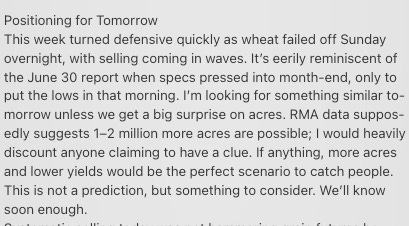
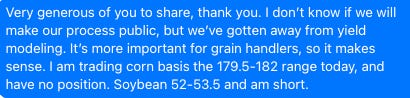
Proportionally ✅, causal ✅ and directionally correct ✅ I’m pleased with the team. Here we provided some guidance on how to identify credible forecasts.

Nico, with wheat and corn up 20, it was a bullish report because the USDA did good yield work and reflected the weather in the USA, Europe, and logistics in the Black Sea.

Nope. Not at all. There were a whole lot of acres. Inexplicably everywhere. The algos scraping yields got monkey hammered. Hate to see it (wink, wink).
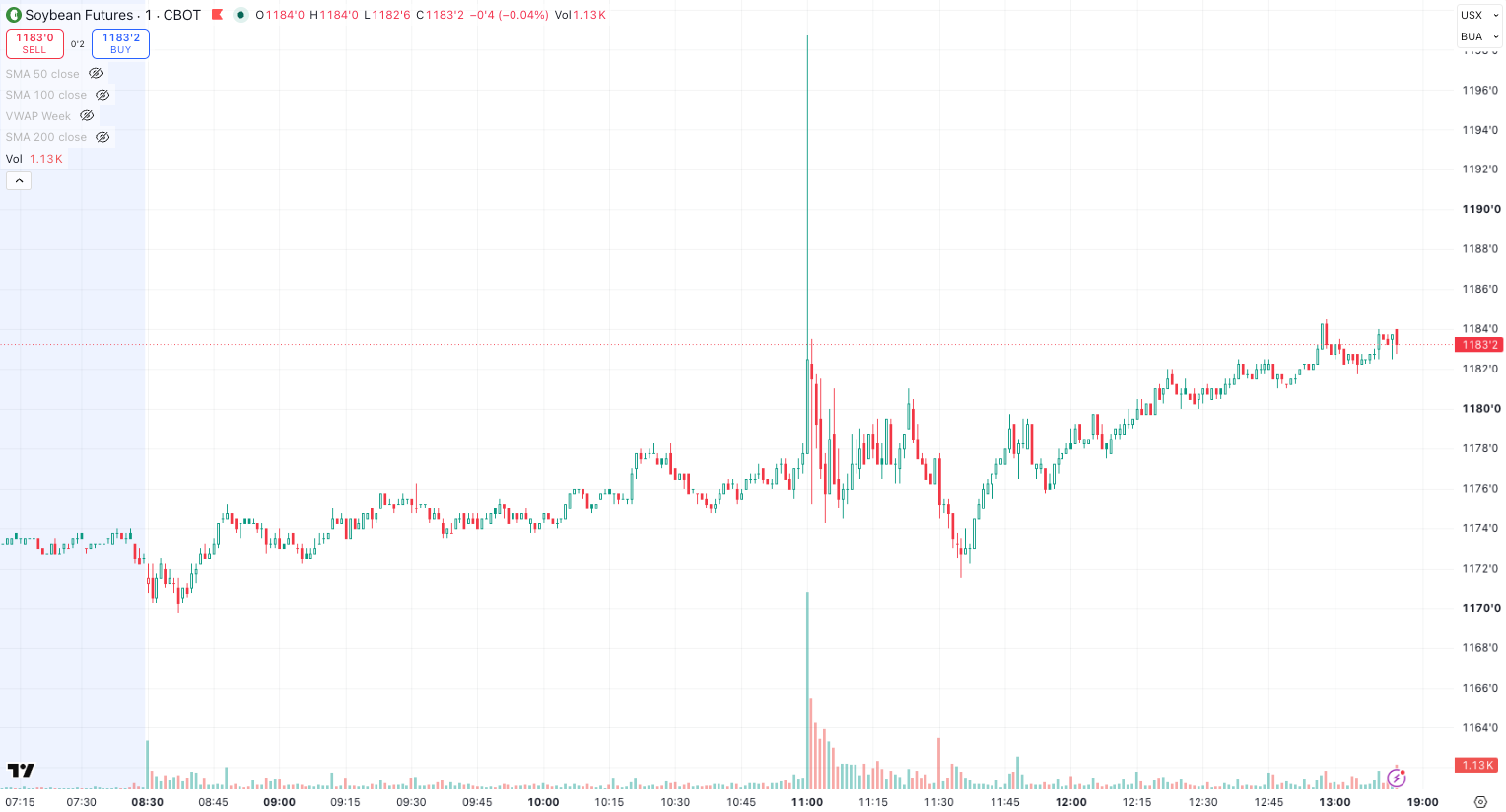
Actually, the price action was the signal. I will explain in a moment.
Healthy market reaction right? Muttered with sarcasm and contempt.
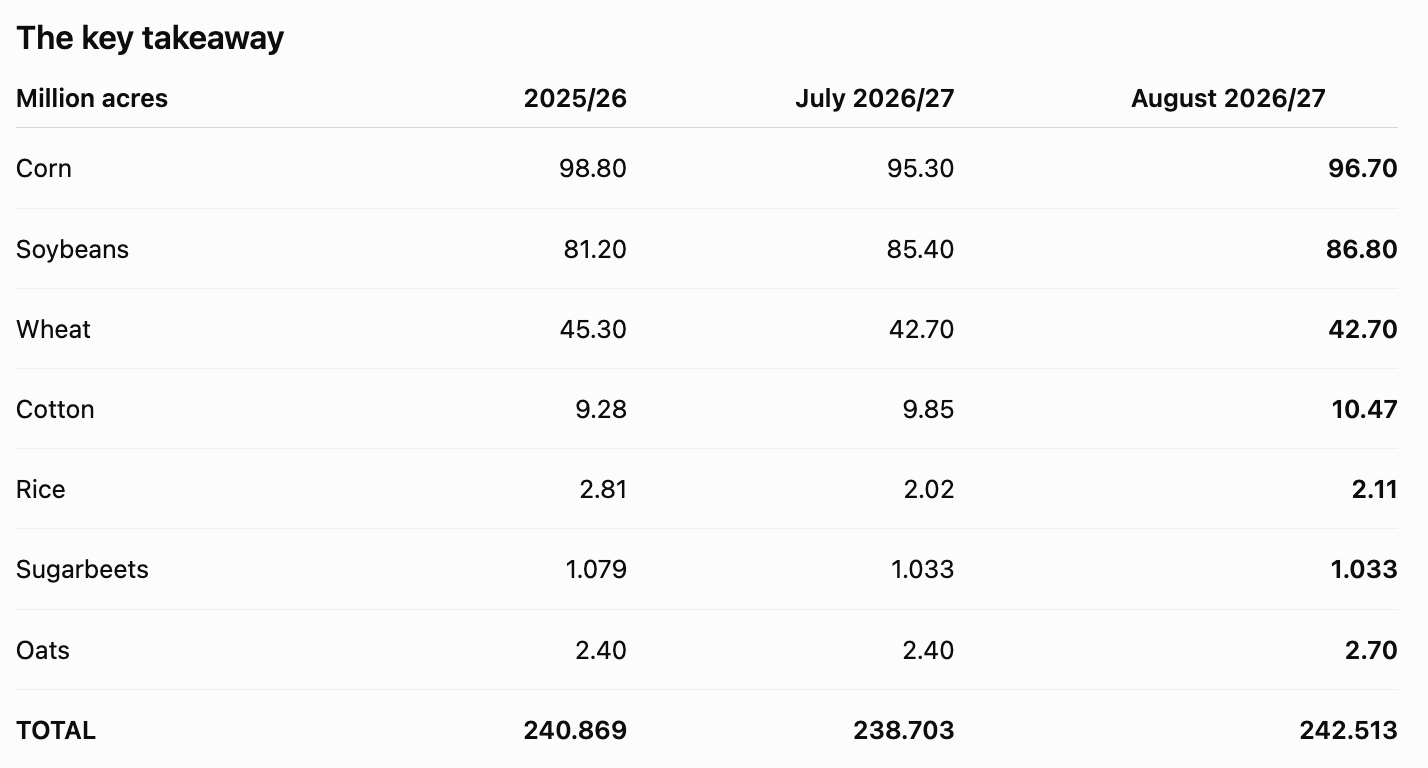
Last year’s surprise was also a large adjustment, only in corn acres because farmers favored corn.
This year farmers oddly favored
check notes
Everything. Huh, that’s odd. More of everything.

People much smarter than I took notice.
NASS did coincidentally send this out right before the report to fuel the skepticism fire. It doesn’t mean much, but for an agency that’s about to have a crisis of credibility, this won’t help.


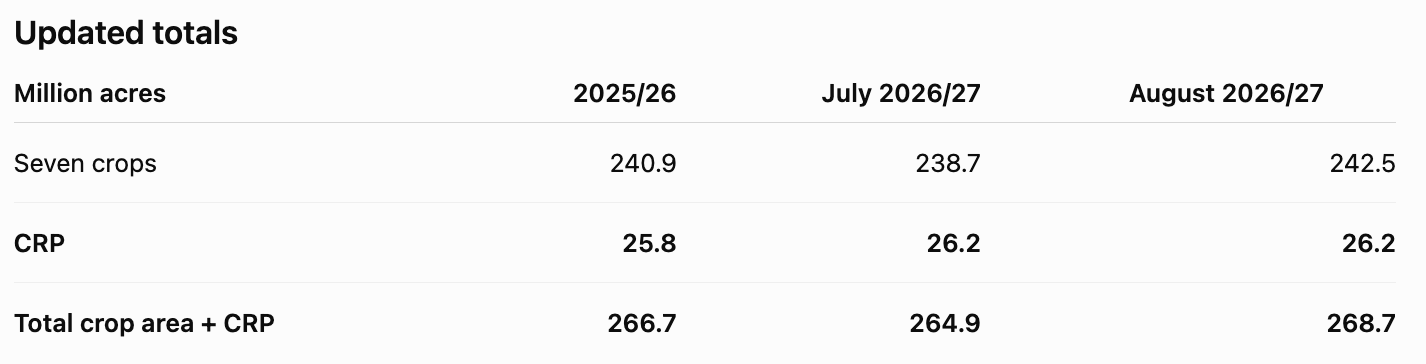
Wow. Almost 4 million more acres, even more rice and cotton when gins across Texas reduced annual operational plans in May, and Riceland announced the closure of elevators in July.
Farmers must have put acres back in rotation.
Nope, not that either. 50% more will be spent on conservation payments under Trump than under the wasteful Green Biden initiatives. Yes, you read that correctly.
I could beat the point home by citing feedback from local experts, but we can avoid this right? Naahhhh let’s hear from a few.
Really surprised by Iowa coming in over top of last year with how the West half of that state fared
Less planted beet acres in the us and that WCB drought will have an impact on beets
I should probably get the team together to see what they think.

Come on guys, put your heads together and come up with an explanation.
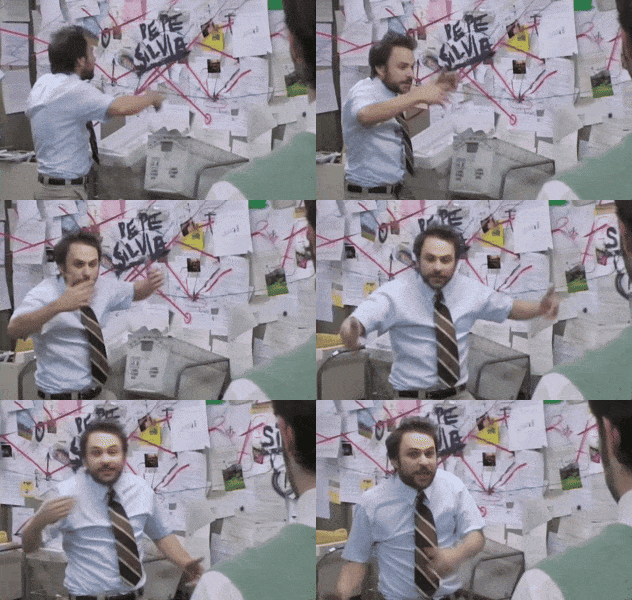
We’re struggling to find a plausible explanation.
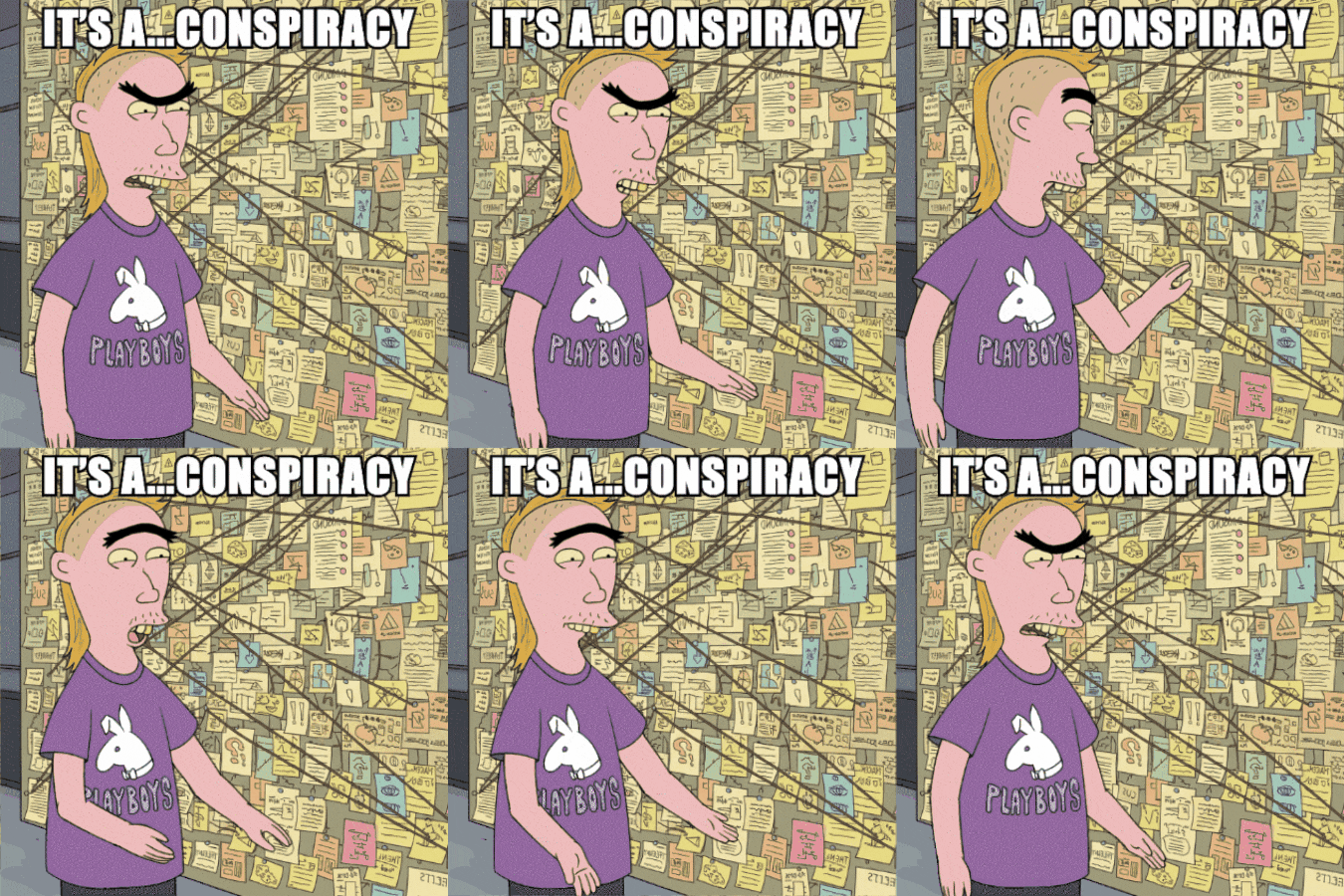
How do I spin this into a productive message for the subscribers?

Let’s ask the fake news expert himself.

The good news: the USDA’s yield work was solid.
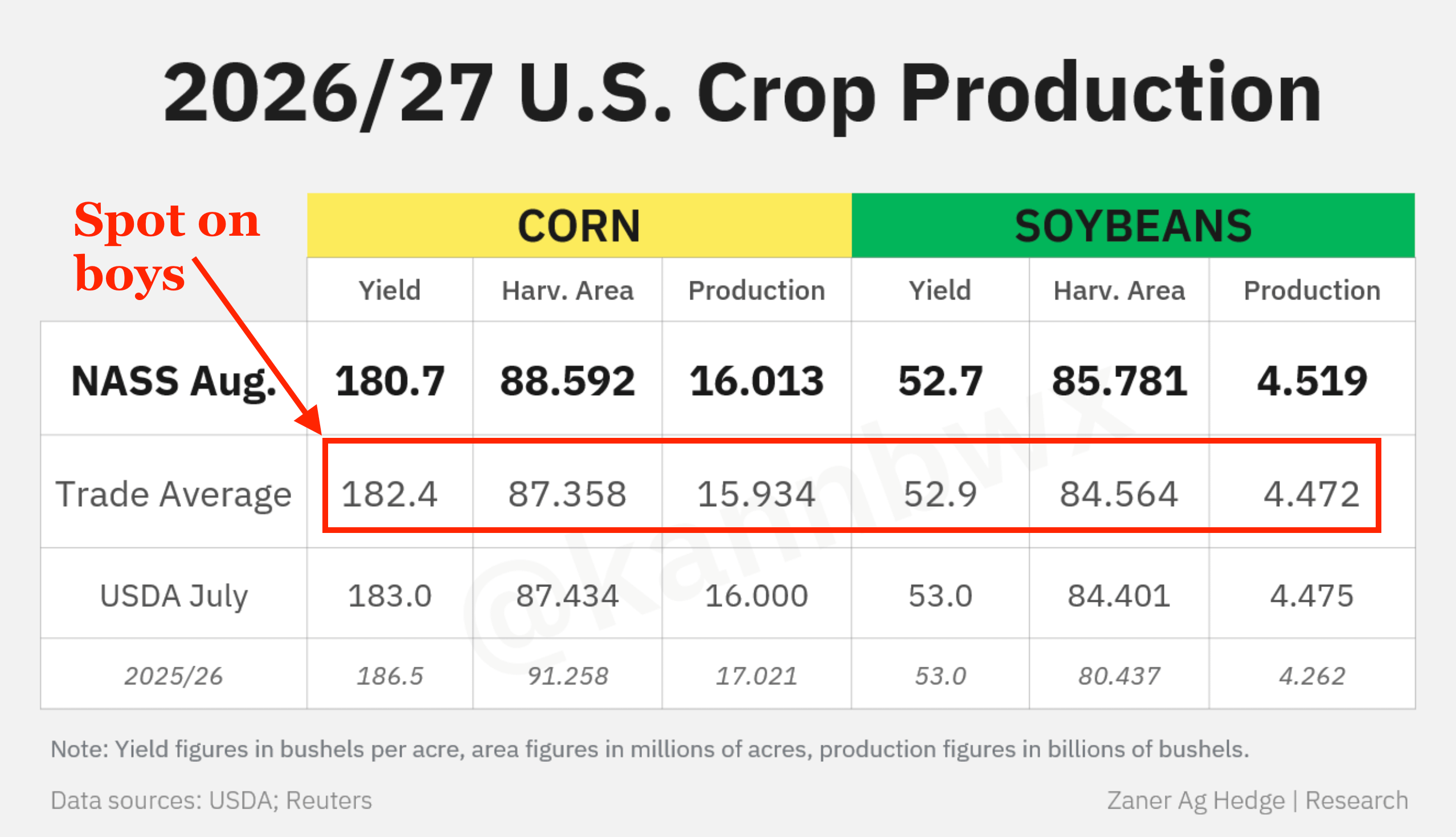
The bad news: we trust nothing about this process, so my balance sheets will assume all acreage increases are overstated by 50% or more. Which means anyone who discounts the commodities that appear overstated might be tempted to buy even more futures. Which commodities could that be…
*checks notes again*
Yup, that’s almost all of them.
Let’s see how the legacy newsletters and X leadership did. Fabian blocked me. Which is heartbreaking because I could’ve missed this one, and been buying back my shorts 20 higher.
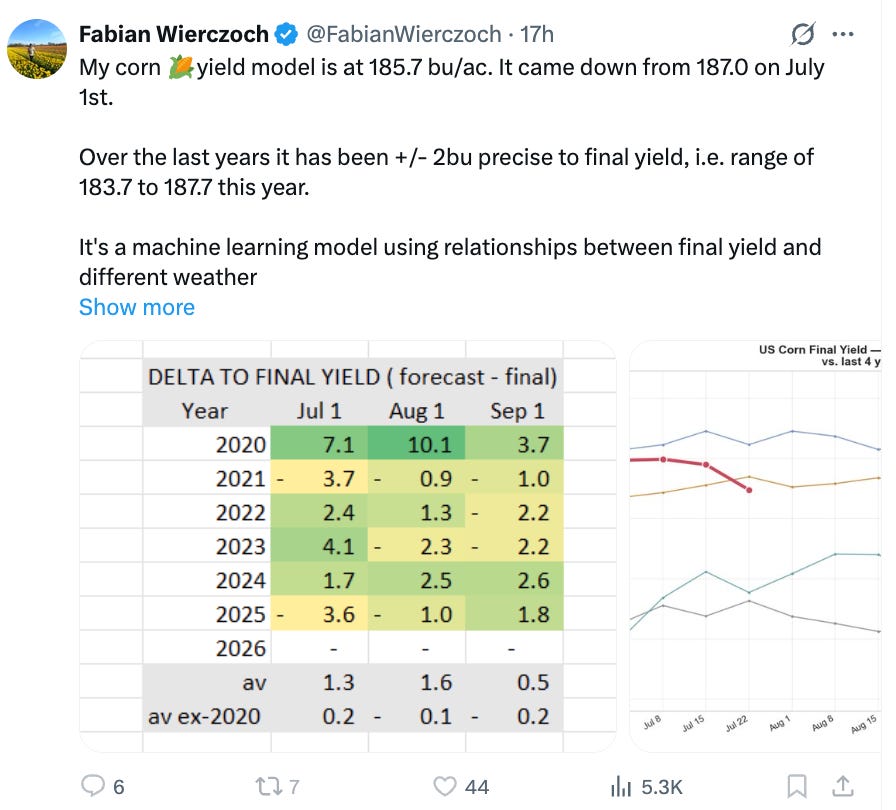
How Did AiQ Fare? A-
We were bullish on every ag sans soybeans, which was one of the laggards across the grains complex. Plus, they came right in line with our yield expectations.
I’ll give the team an A- since I’m the bull and I was not bullish enough.

Biases haven’t changed much from a week ago.
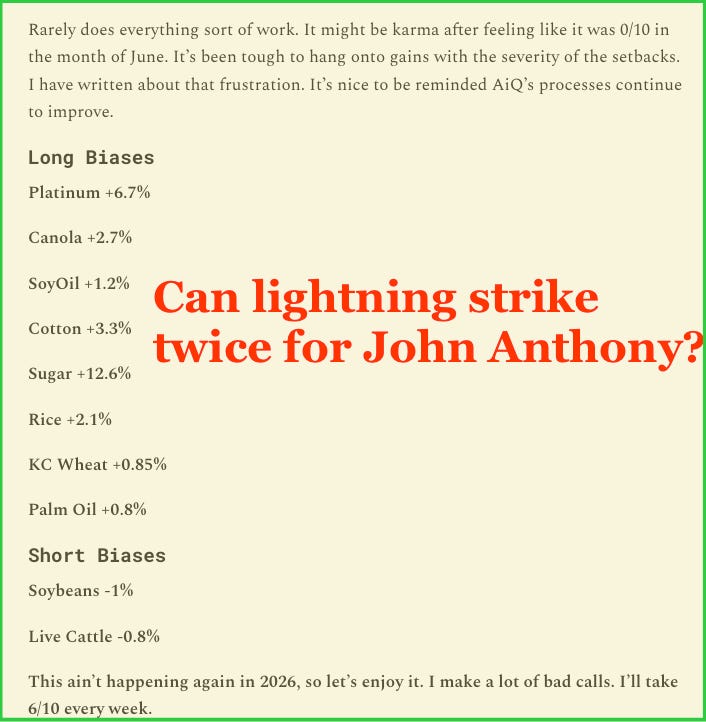
Here’s the link to last week’s note: John Anthony
Here’s the bottom line on how the market will interpret and then trade this report: do they believe there’s a rat?
Since I am making this one free and public, we’ll get to the bottom line right away. Get this right and you’re much more likely to stay ahead of the crowd because no matter how many magic acres they find, the reality is that balance sheets are tighter, the Black Sea is worse, and the trade will grow more skeptical of future NASS revisions.
There are two ways to make money from this report. One more strategic and big picture, the other tactical.
1. Get the big picture “rat question” correct.
2. Pick and choose your spots to fade these numbers.
The rat question refers to the fact that anyone with a modicum of experience knows there’s a rat in this report. They nailed the yields. Kudos to the USDA for doing a good job here. In general, they did well across commodities. But then they went and smoothed it all out with acreage increases, and by ignoring the Black Sea.
Does the trade start discounting the USDA figures as of 30 minutes after this report and trade tighter balance sheets? Do they assume the September report is tainted too? If the answer is yes, we are not setting back much. Full Stop. I know where I stand, but since I cannot prove it, so we’ll have to treat it as a conspiracy (wink, wink).
The second question is a tactical approach to buying the specific commodities most egregiously overstated in production. An example was a few hours ago in cotton.
I was planning to lighten up on this rally since it was obvious yields needed to be cut, so possibly the bull case was close to fully priced for now.
These magic acres gave me the opportunity to buy it all back cheaper. I will look for a similar opportunity with rice.
I want to make this point. Outside of the Black Sea and a couple million magic acres, it wasn’t a bad report.

I feel bad for the individuals trying to do these jobs. The credibility is holding up about as well as an Anthony Fauci hearing.
I’m sorry for those who did and did not vote for this. I bet a lot of farmers will miss marketing their crops better as global end users chase prices higher because they believed the words coming out of Washington.
A subscriber and veteran broker asked me,
“Well then Nico, where did all these acres come from?”
“Washington,” I responded.
While the industry might begin to get upset as the facade of credibility crumbles, this is what traders in Moscow, Beijing, and Buenos Aires are accustomed to.
I've seen this throughout my career. I’m excited for the ride. Let’s get in together.

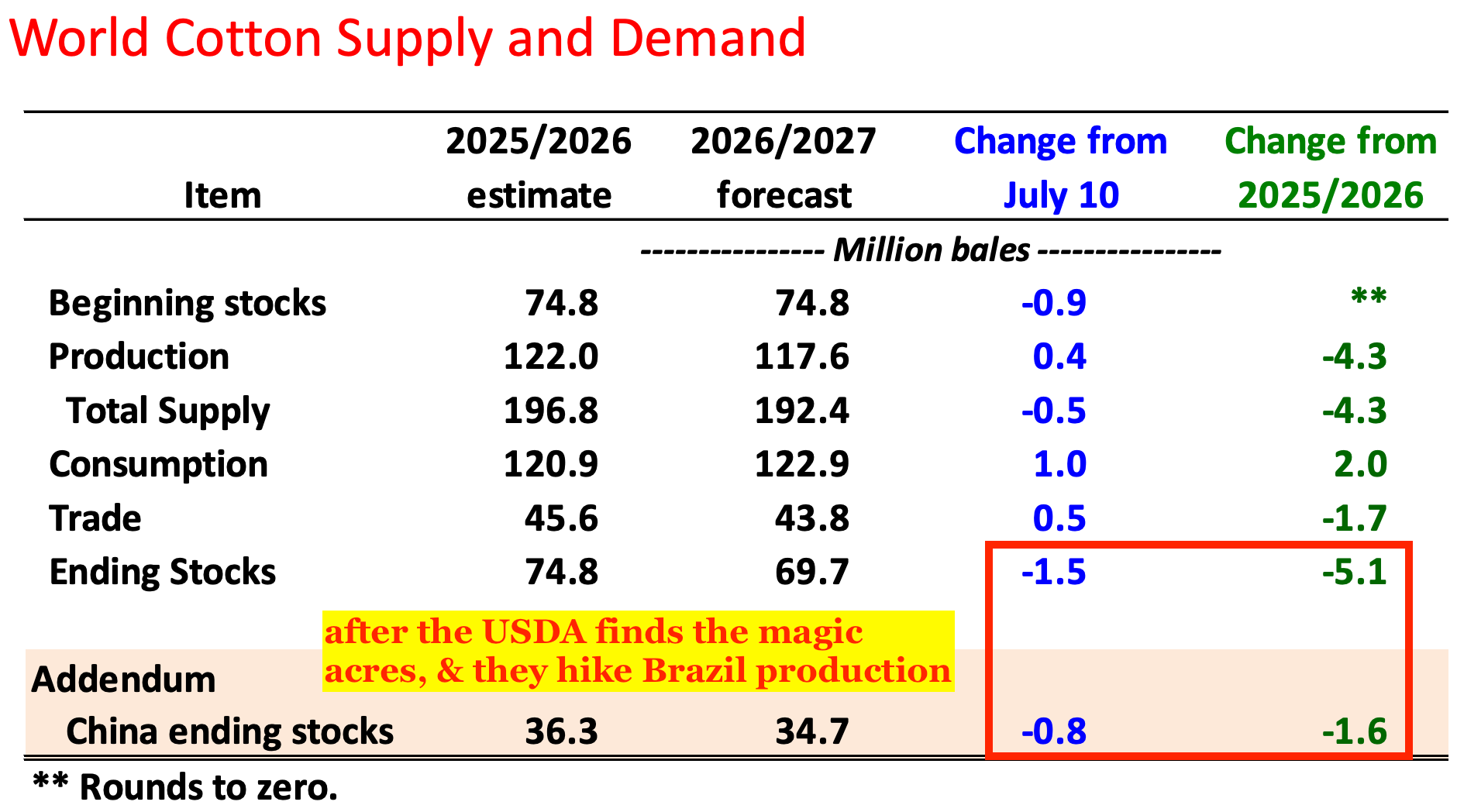
This is why I brought up the price action was literally the signal. If the trade had actually believed these figures, corn would have been up 6 cents, soybeans down 6 cents, rice down 30 cents, and cotton down 160 points.
The signal was the price action. Occasionally, it’s that straightforward. Essentially, a giant vote of no confidence in NASS, which sets us up for a much more interesting September update.
Remember, food security is national security. People have been lulled to sleep treating foodstuff like it’s always readily available and cheap.
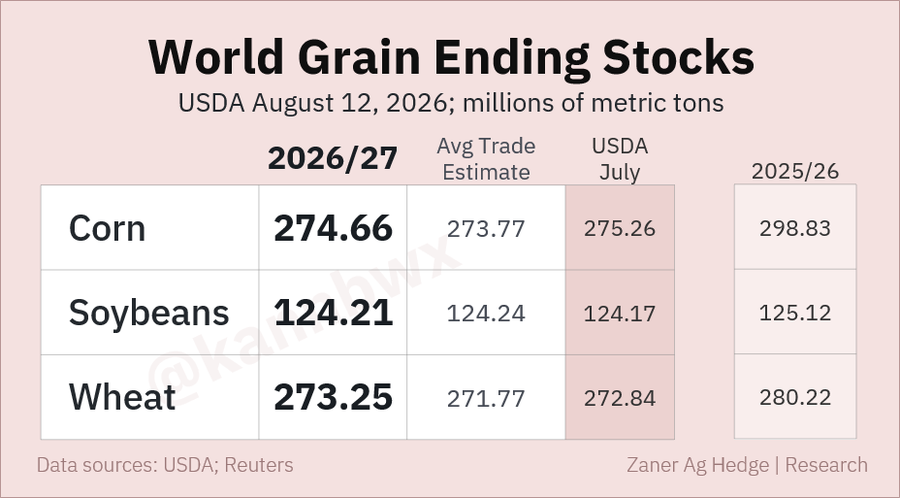
World Numbers
Sending the exact wrong message at the wrong time…
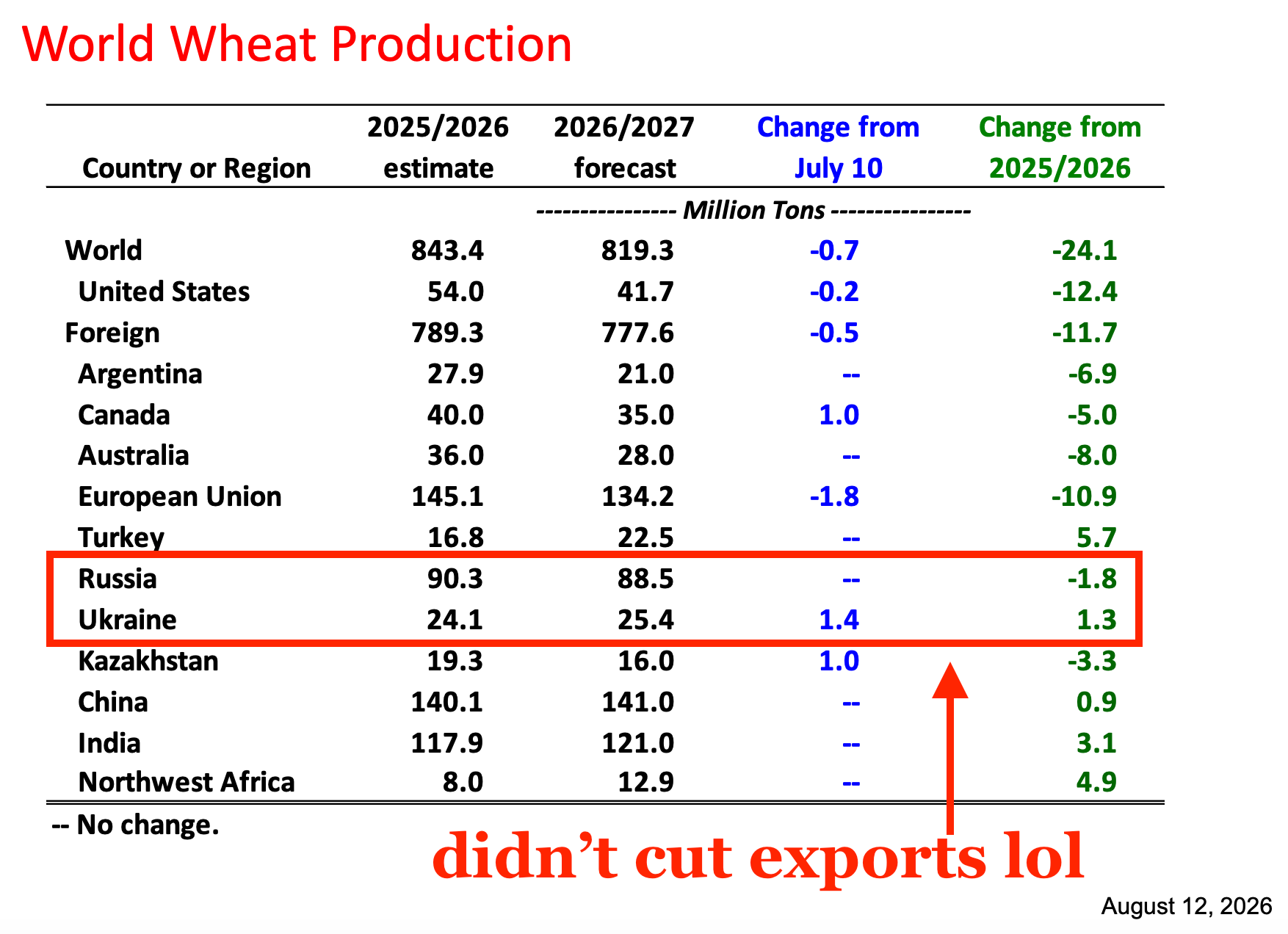
The world wheat buyer after “trusting” the work of the USDA.

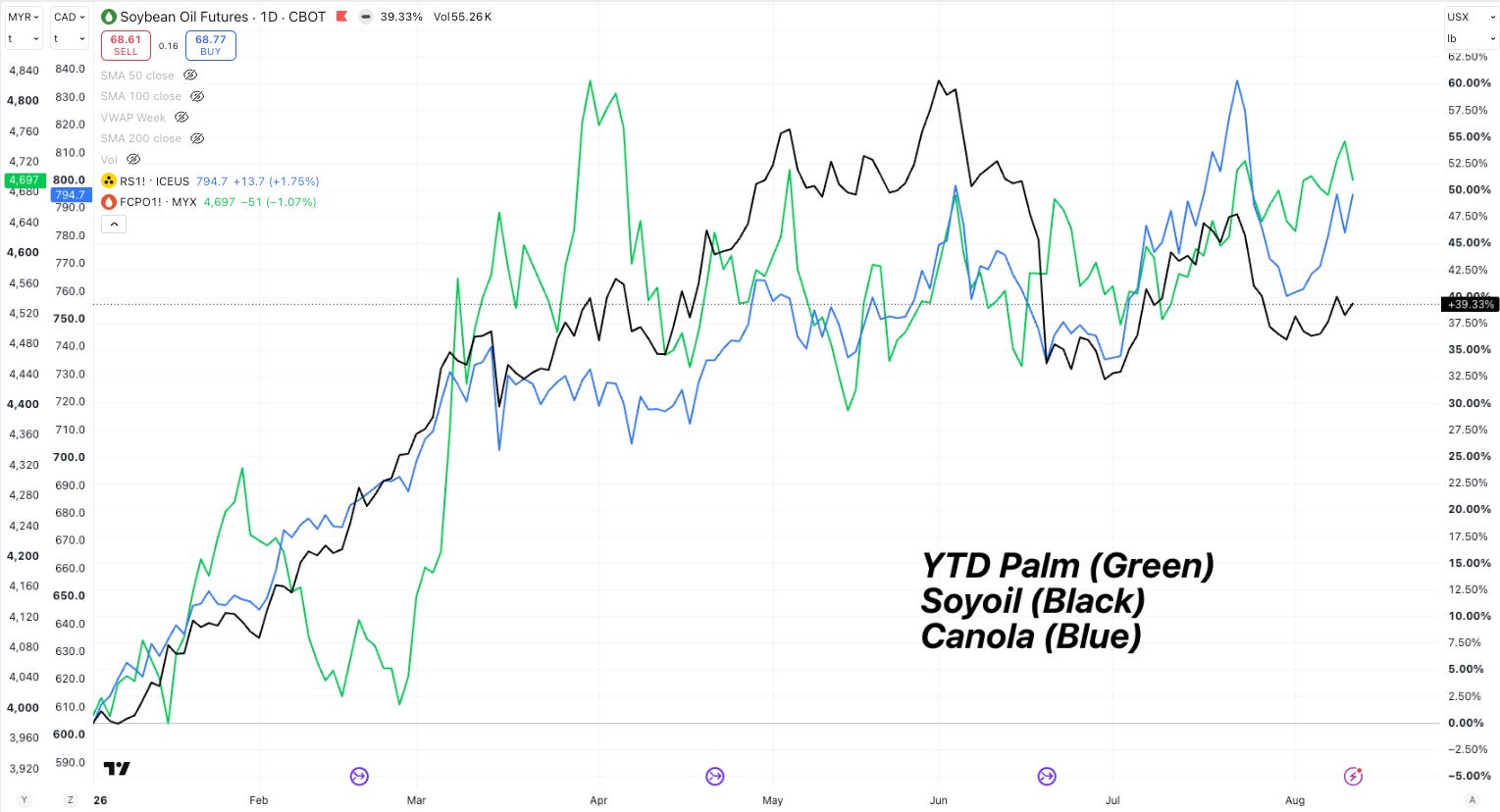
Vegetable Oils Are Next
I hear the pessimism around the oils.

Sorry, wrong oils, please don’t bomb me.

Yes, these oils. Everyone wants to hate seed oils all of a sudden, but not this guy.

I get the argument that food demand is weak, but biofuels will remain a global solution. Traders are turning bearish right as we get ready for South American weather and the Southeast Asian El Niño that could make the next 12 months the hottest on record. Sorry, but I am not getting bearish as soybeans build a base above $11.50 and palm oil looks like it’s getting ready to do something.
Cotton
I wanted to quit cotton. Lighten up and move on. The front spread’s acting weak (correctly), and I don’t see any solution with China on the fiber (read: demand) side until late 2026 or 2027.
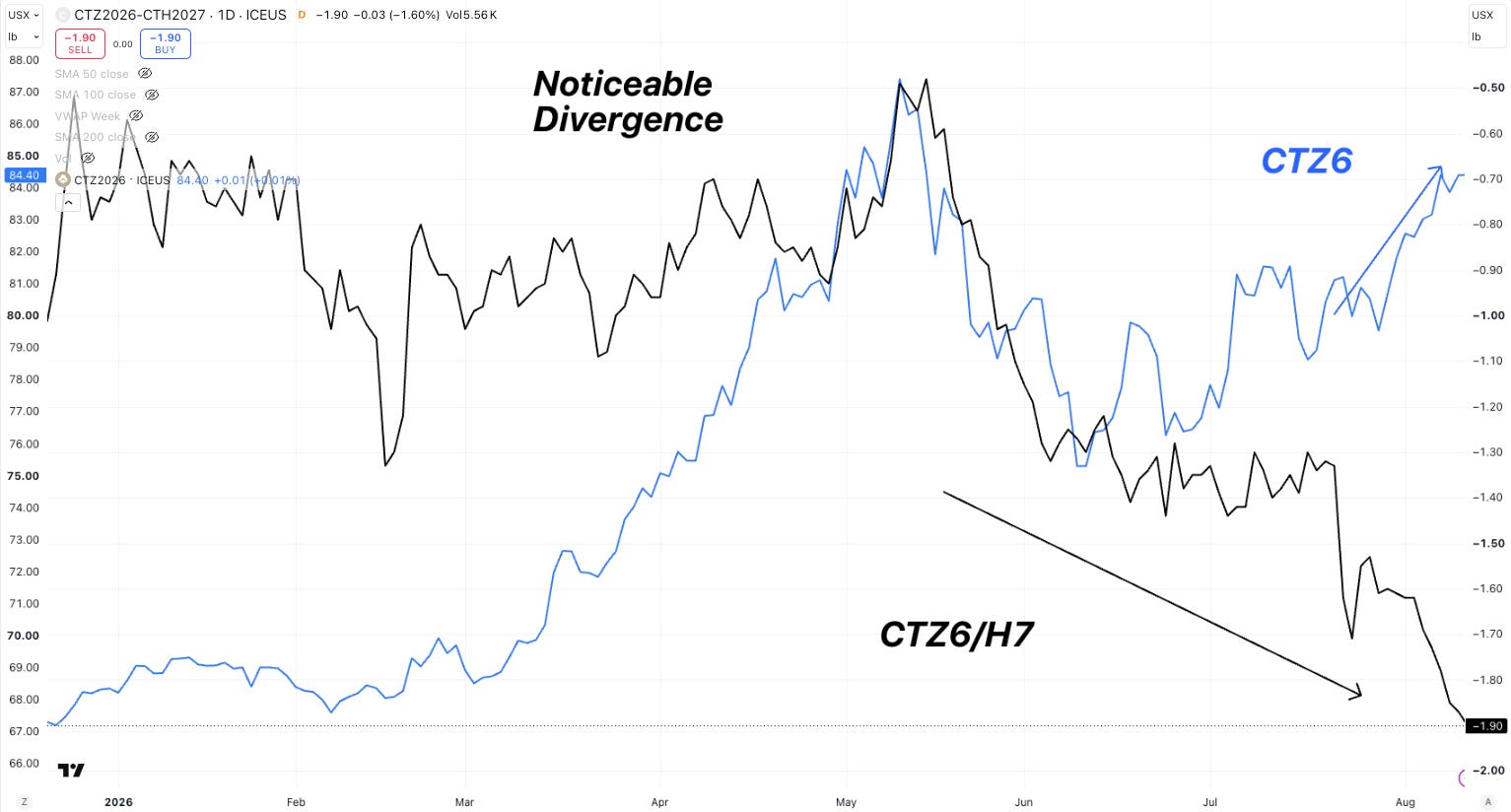
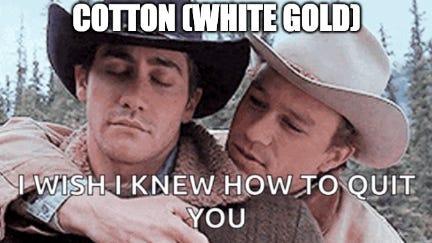
Then I see today’s magic acres, and I’m back. Like one man who looks into the eyes… That’s enough with that analogy.
Hormuz 2.0: Wheat
There weren’t any big production changes to make in wheat, since it’s the northern hemisphere summer, so they couldn’t make too big a mess with this balance sheet.

They spent 5 slides talking about the corn weather in Russia and zero addressing the 800-lb gorilla, the disruption of upwards of half the world’s wheat supplies out of the Black Sea over the next 5 months.
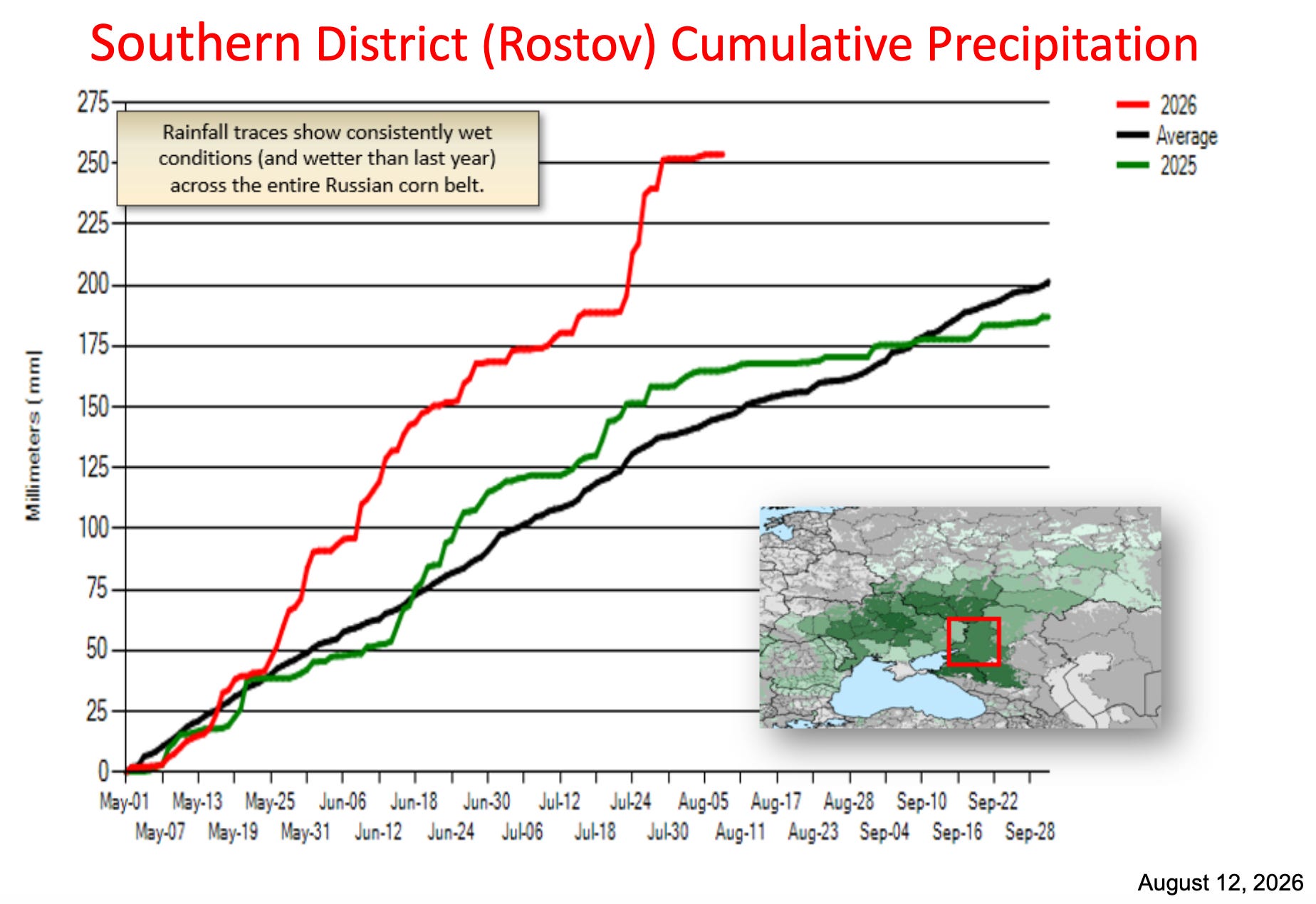
I don’t want to assume the worst, but Russia grows 15 million tonnes of corn and it got 5 weather slides.
The USDA’s own Foreign Ag Services quarterly Ukraine Feed and Grain Report was released August 5 and presented balance sheets cutting exports by nearly 50%. Report link here.
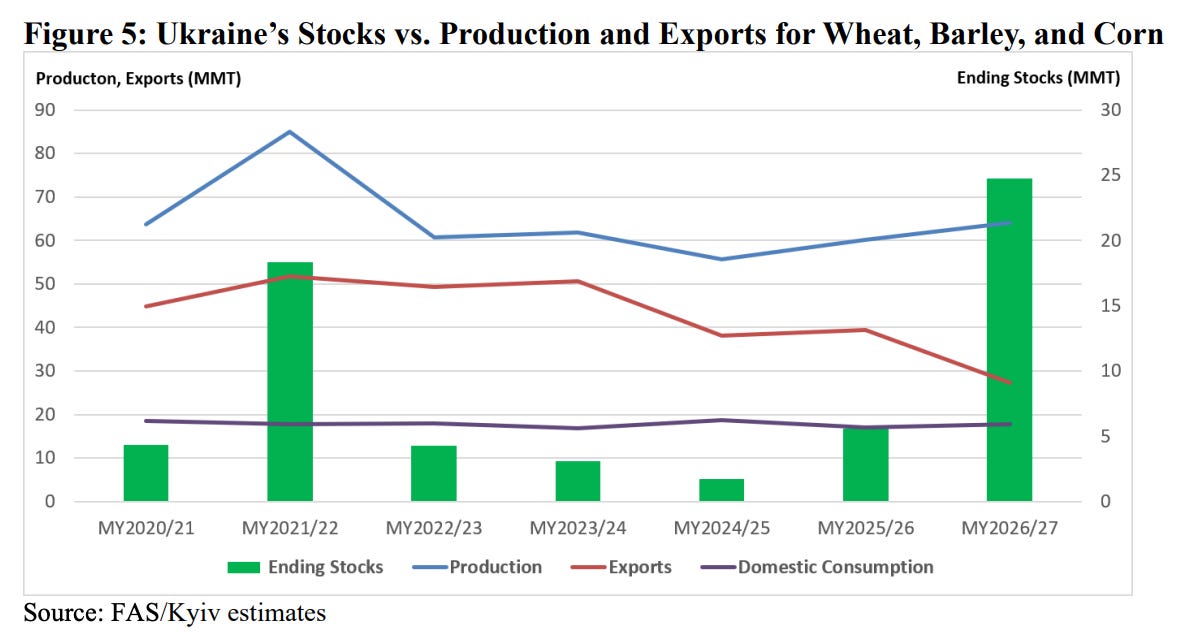
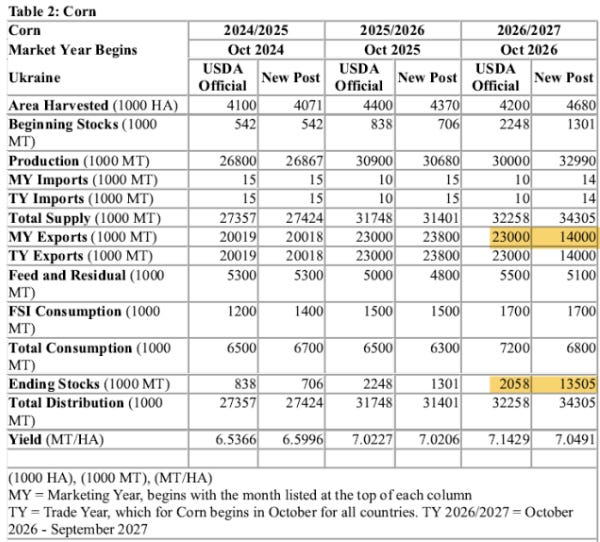
Why would the WASDE simply gloss over the most important factor for the global grain trade over the next 60-120 days?
In a nutshell, they painted a pretty global production scenario, and ignored what matters. Argentina and Australia might have some upside, that’s literally all there is to say about production.
Let’s briefly check in with how allies, enemies, and tariff frenemies alike are following the American order… Slopulism has consequences.


Our first estimate puts August wheat exports at 3.0–3.4 mmt, down from 4.5 mmt a year earlier and well below the five-year average of 5.0 mmt. This could be the lowest August volume since 2016/17, when Russia exported 3.1 mmt.
The weak start to the season reflects continued problems with Black Sea exports and subdued demand from major buyers. Security risks remain elevated. The closure of navigation in the Sea of Azov continues to affect shipments.
On Aug. 12, an overnight attack on Novorossiysk damaged two major grain terminals: Novorossiysk Grain Terminal and NKHP. The scale of the damage is unknown.
If operations resume within days, the impact on exports will likely be limited. If they do not, we could revise our August wheat export estimate down by 0.5–0.7 mmt.
-SovEcon Update
The wheat curve has sold off, while flat price held steady, following MATIF’s lead.
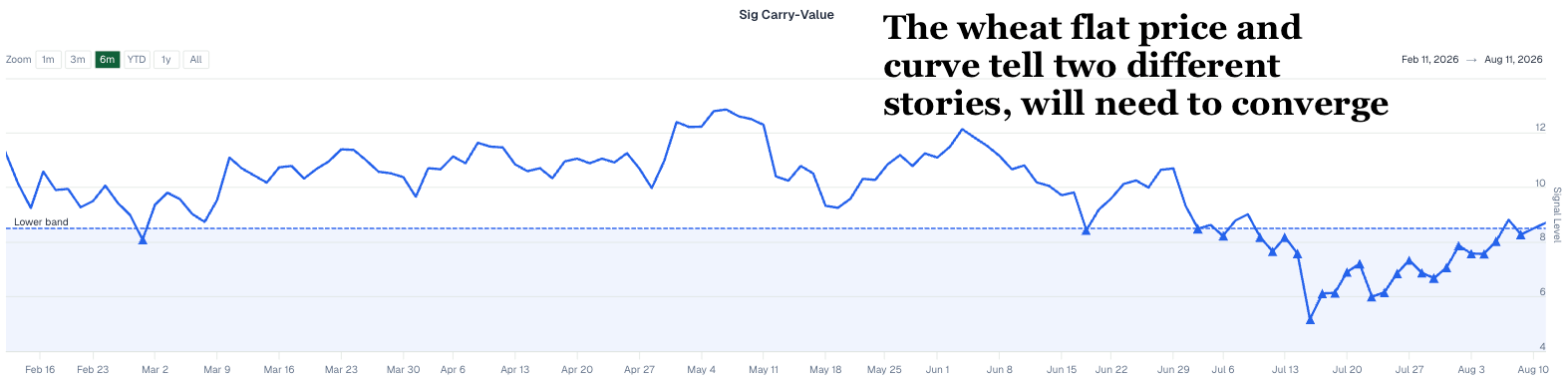
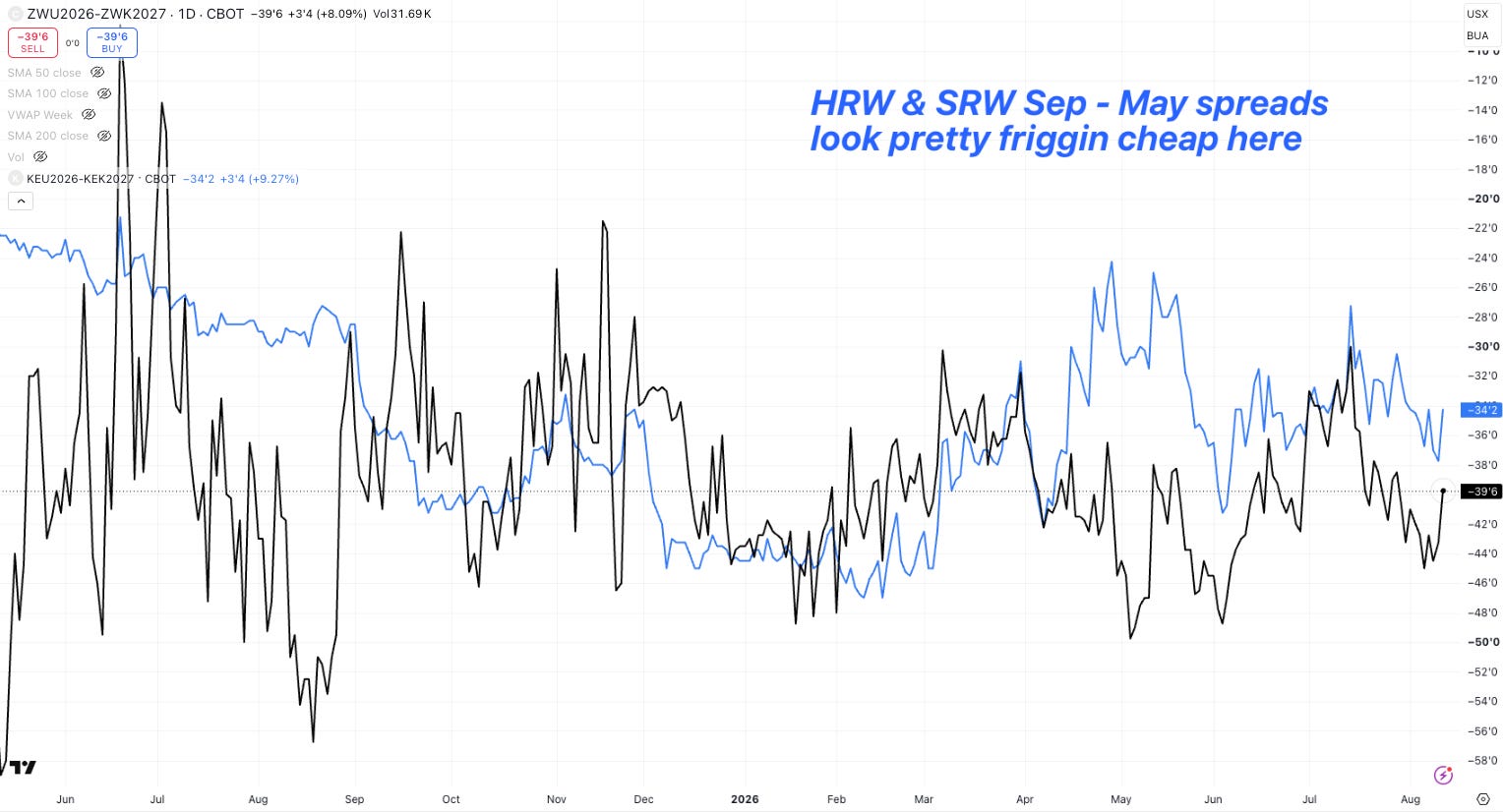
Is this the most mispriced grain spread, or is it a signal the story will fizzle out? The key question for anyone positioning long. You know where I stand.
The next regional political flashpoint is predictable.


As is the next one…
“Get me Hegseth, let’s have the dragons clear the Black Sea when they are finished with The Hummus and Bob’s El Straits.”😂😂
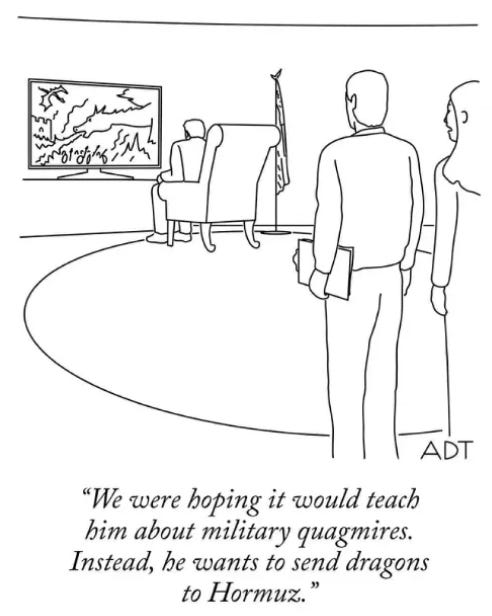
Iran has not loaded a VLCC in a week, and grows more militant. The USA does nothing.
How does Russia not retaliate viciously in the next 72 hours?


The problem with being a bully who TACOs is now everyone knows you’re a bully who TACOs.
After all, Putin, Xi, and Revaee, the new IRGC commander, comprise the not f*cking around crowd. Bullies who talk too much need to man up or make way.

On that note, could grain prices weigh on cattle? Yes. Stay disciplined on the rallies, after all, your turn is over.
An ode: “Ranching the Golden Era”
Oh, sing of the ranchers who rode on the ridge,
When Donald J. Trump built a golden-paved bridge.
He made ranching great, and the profits ran high,
As feeder margins scraped against the blue sky.
The top of the cycle has finally come,
Your time is now up, but don’t look so glum.
There’s taxpayer cash left to cradle your fall—
Uncle Sam will gladly foot the bill for it all.
So thank Mr. Trump for the cash in your hand,
And pass down the platter of Argentine beef on the land.
Rice Ain’t So Nice
Anyone in the rice trade knows lagging exports due to excess competition from subsidized production at cheaper world prices have led to less competitiveness for US exporters. Yet, the USDA doesn’t even aim for a plausible rationale. They just add a bunch of acres and raise the carry-out.
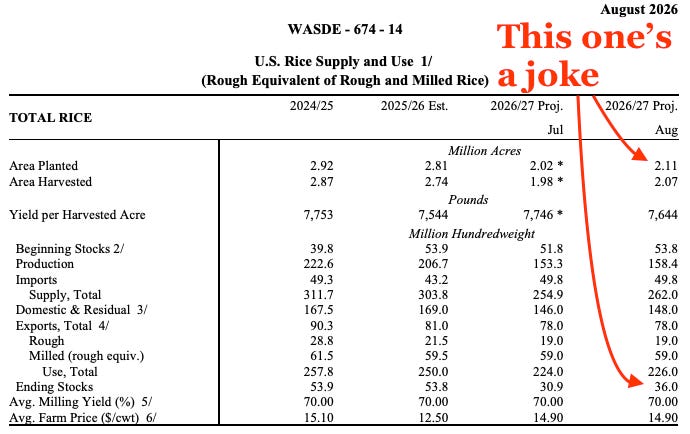
Here are some cash prices in China and India. Possibly not the best time to be sending domestic producers and end users the “all clear” signal.
China Cash Rice Index (C3)
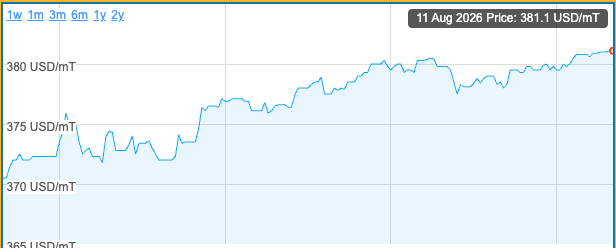
India Cash Rice Index (C3)
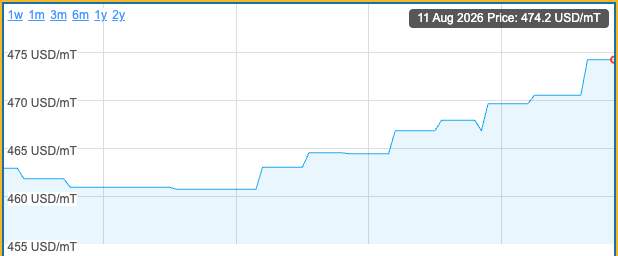
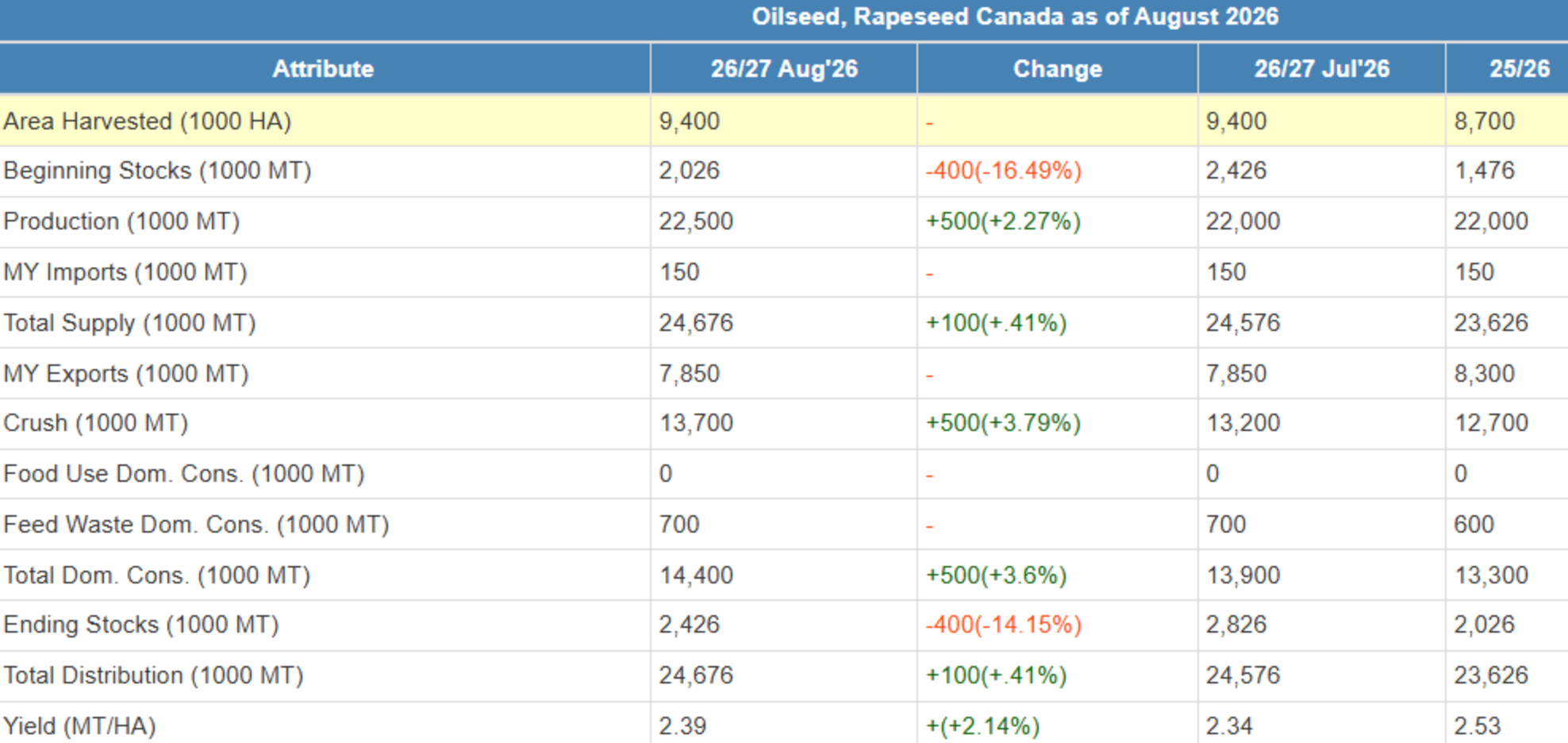
OH CANADA — WTF?
Obviously, I’m pointing the finger at political influence in this report. I mean, Stevie Wonder sees it.

Was it just a “CPI’s too high, keep food prices anchored?” Or is the agency trying to put on an optimistic front? Who knows.
So how about these canola changes. While the USDA does not address the most pressing issue, Black Sea exports, it again dedicates 9% of the total slides to Canadian weather. WASDE/NASS Executive Briefing.
Then proceeds to draw the wrong conclusion.

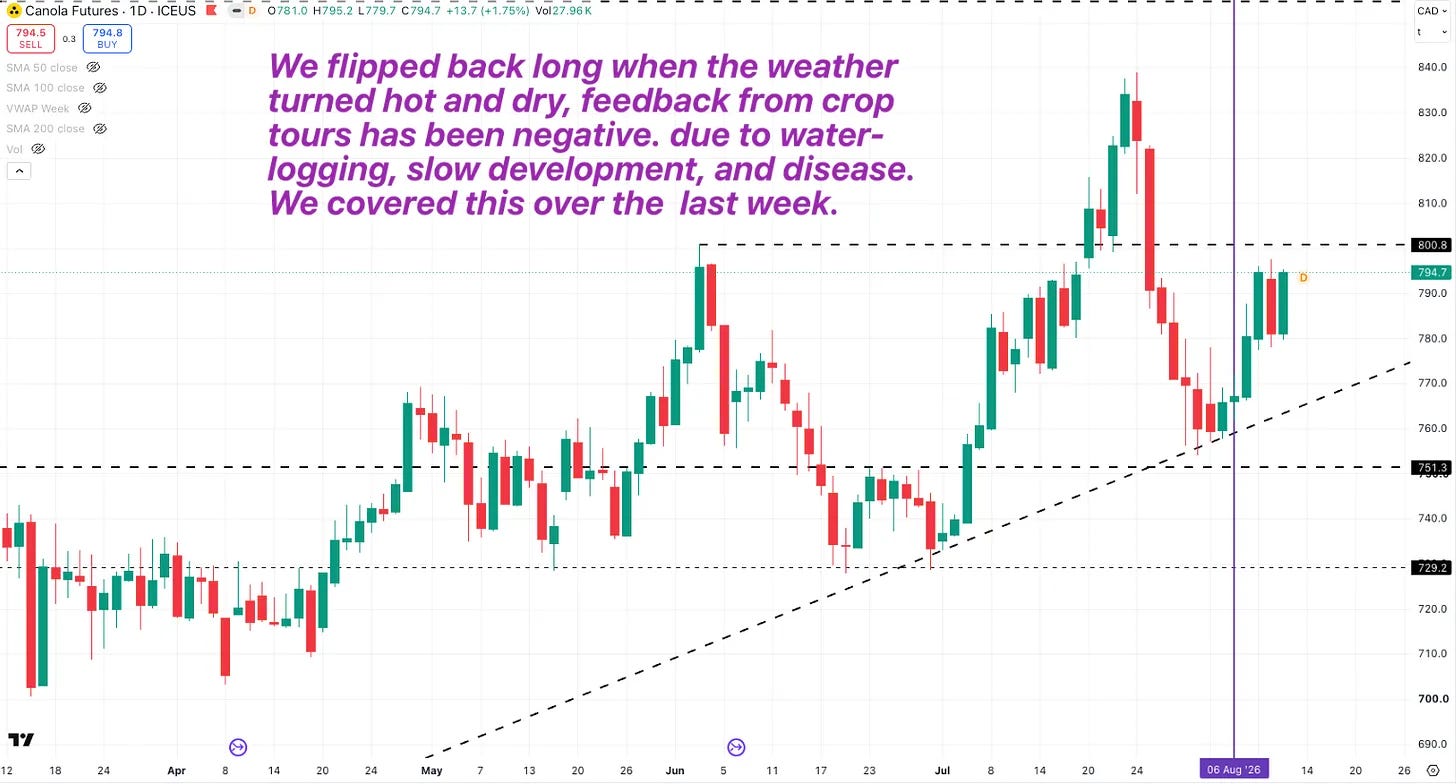
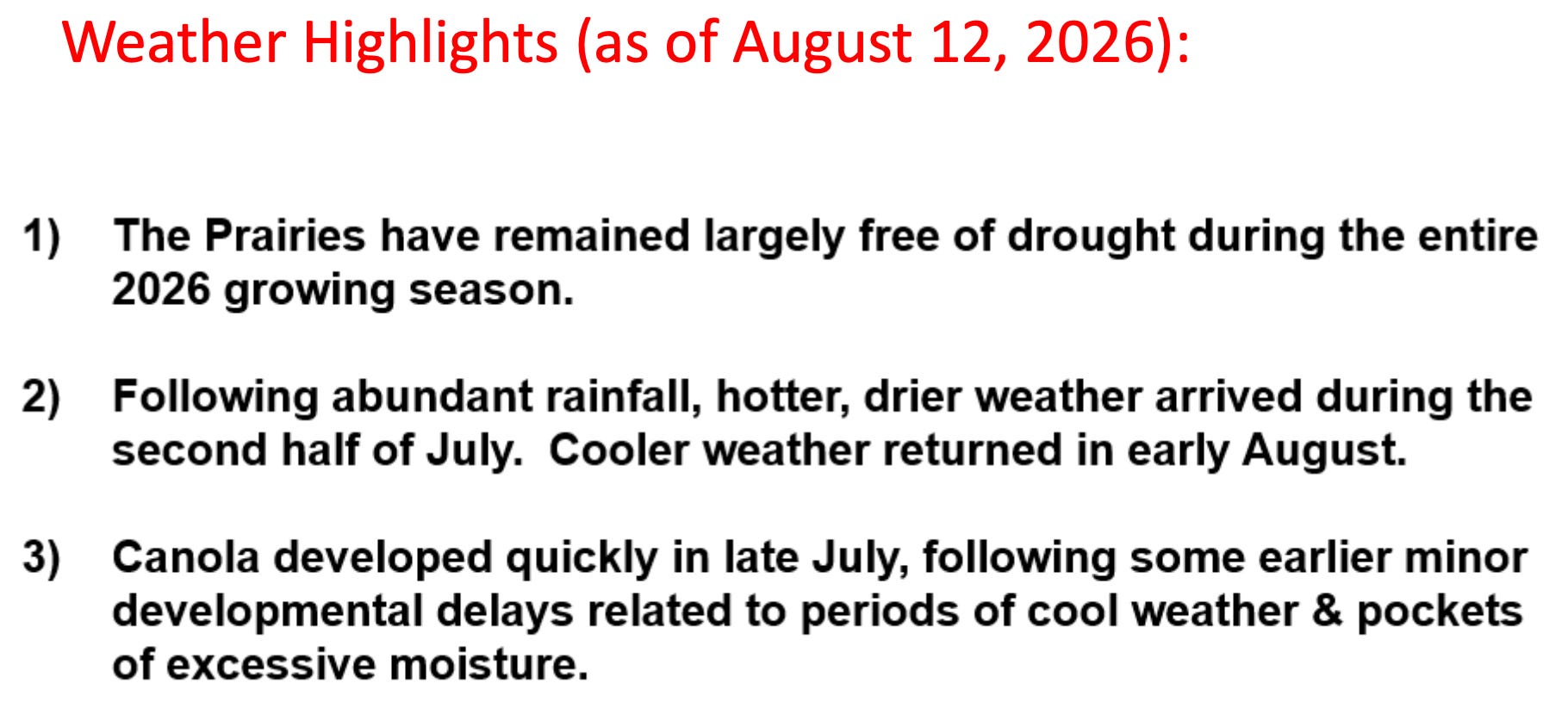
Everything we are hearing indicates the wheat crop is in better condition because it handles development during excess moisture better. Either way. Seems extremely strange to devote this much effort to Canada, while addressing the far more important drivers —
Namely El Niño and where all the magic acres came from.
Looking to September
AiQ’s biases have not changed. Commodities are building price floors at higher levels, and no amount of magic acres is creating a silver bullet for buyers to sit on their hands and wait for commodity prices to come to them.
We recognize full well that farmers may plant more as Washington promises more insurance and direct payments.
I have warned that this administration’s socialism will slowly break the economic signals the industry relies on. Are Magic Acres the first real sign?
Nebraska plants less corn, while Minnesota plants more corn and sugar beets; Arkansas plants more rice, corn, cotton, but soybeans stayed the same; Texas plants more corn and way more cotton? Everybody plants more. Yay!
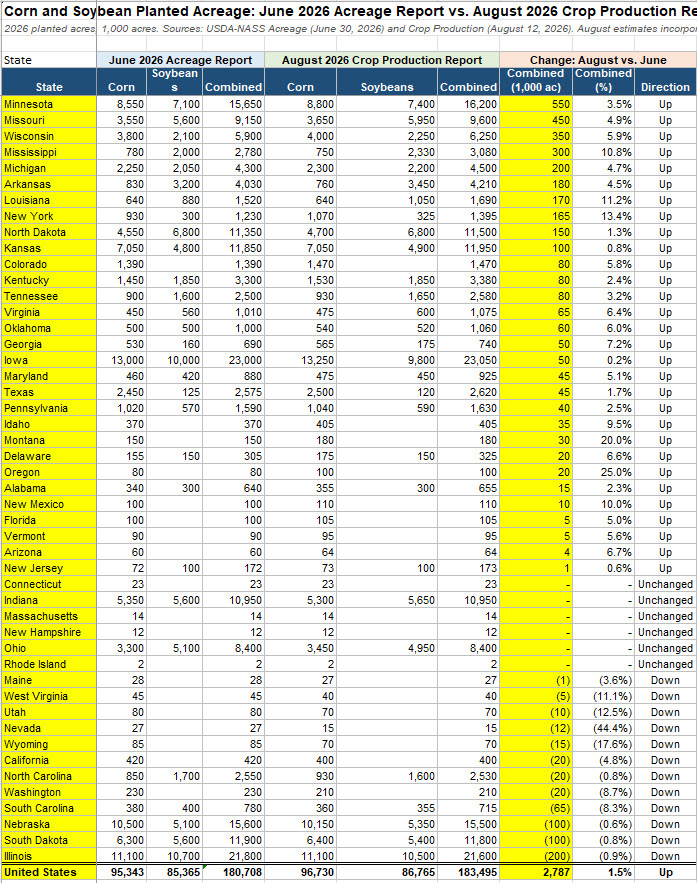


Let’s give Scott some credit here — he didn’t try to act as if there’s any rhyme or reason to these acreage adjustments. There’s not.
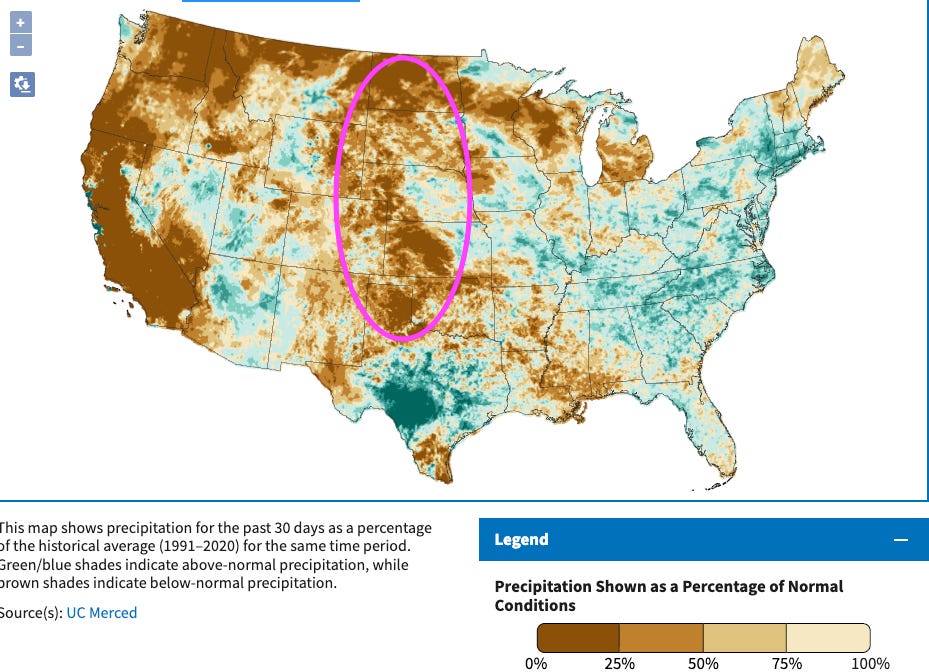
Last 30 Days Precip
Mid July Update
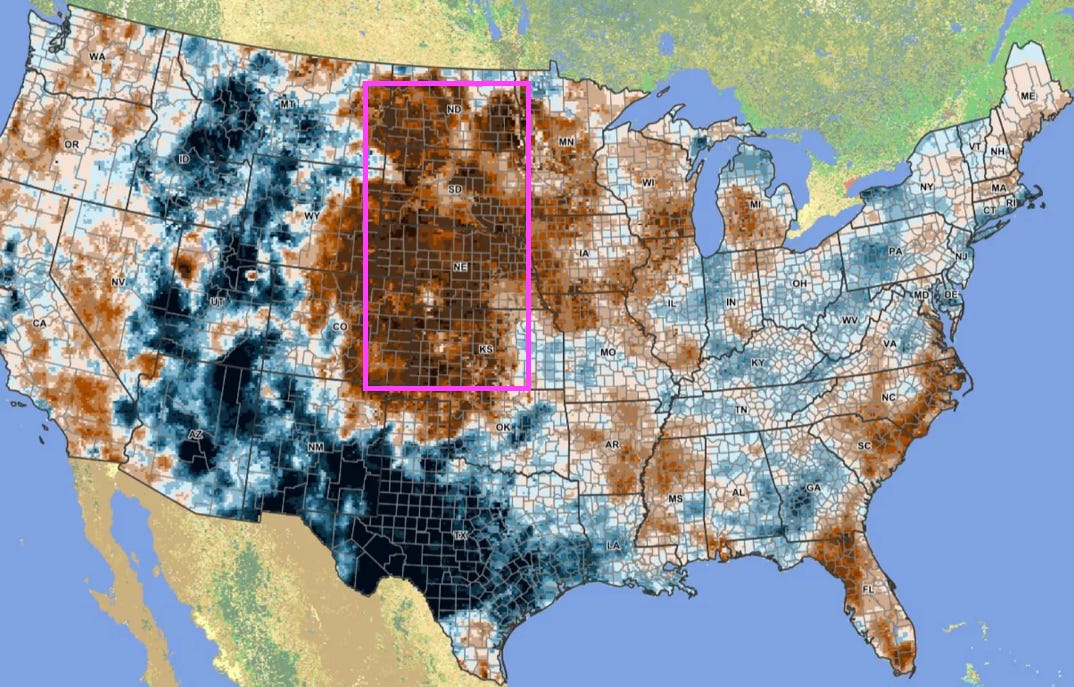
If we ignore the magic acres, the report seems fair, and when we factor in the weather during the growing season, it’s clear the USDA came to AiQ’s conclusion — there will be fewer supplies heading into the fall.
Instead, we have a similar amount of stuff on paper to what we had before.
If I were not a cooperative citizen, happy to ingest my daily blue pill, support the goal of endless data centers and flock cameras, all while sleeping comfortably at night because I know the people in Washington are looking after my best interests, I might question where all those magic acres came from.

But that’s not me. I wouldn’t do that.
Stay disciplined. Good luck.
Thank you for reading. Please reach out to Nico@archaiq.ai with any suggestions on how to improve our products or if you’re interested in exploring new opportunities with ArchaiQ. Join our free discord chat here.
This is not trading or investment advice. Trading Futures and investing are high-risk activities; please consult with a professional.