
Buyers Beware
Europe, Black Sea, and China Grain & Wheat Comments

“When you have a problem that you can’t fix, you move the goalposts.”
Chris Whalen
In the note SAAS: Slopulism As A Service, I explain why Europe faces 99 problems into this winter, but an internationally motivated psyop is not one. After a quick sanity check, AiQ subscribers were able to avoid getting sucked into the firehose of nonsense.
If the 47th deal is real this time, a best case scenario is a return to pre-February 2026, and a more agreeable IRGC. Or we're left with a grim nostalgia: Remember when key waterways weren't held for ransom? Who would have thought a series of gross strategic miscalculations and a belief in outdated tariffs could usher in a whole new era of protectionism for global trade.
Yeah, seriously, who could have guessed?

A de-escalation that stabilizes regional shipping routes could trigger a synchronized buying wave from GCC buyers after drawing down stocks over the previous five months. If buffers were at six months of consumption before the Hormuz crisis, what will they be target-wise now? Don’t countries need to be prepared?
In 2021, Iraq, Iran, Syria, and Turkey saw imports jump nearly 7x in a brief window following prolonged regional droughts. This was one of the bullish factors that tightened global wheat balance sheets before the Russian invasion.
Earlier this year, Iran and Iraq were again suffering from one of the worst droughts in recent history. Consequently, buying across the region should pick up quickly.
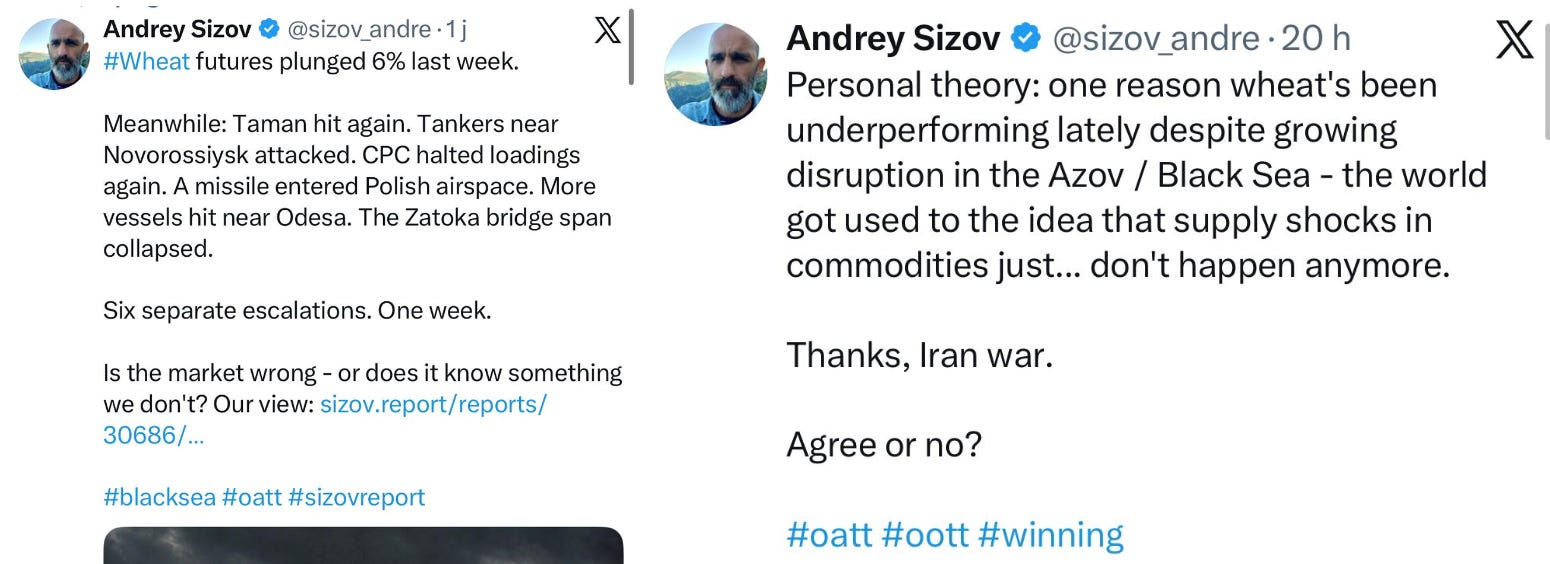
The commodities most at risk are sunflowerseed, wheat, vegetable oils, and regional cash grains. The ongoing Black Sea strikes ensure these markets are not simply “returning to normal” even if the Iran conflict is over.
One of my favorite FERP contras has been all over this. He’s not wrong here, which means it’s worth exercising a bit of caution.
The EU Shortages Will Worsen
Europeans are wrapping up the worst growing season of the modern era — one that quietly expanded into its eastern grain belt. Here is the latest from the EU, which will struggle with even more strained logistics and energy supplies.
Europe’s low water levels are compounding problems and driving up freight costs, and they won’t begin to improve until it rains or the situation in the Middle East is resolved. Europe’s boycott of Russian energy ensures this. Domestic manufacturing and fertilizer production will be uncompetitive and at greater risk as winter approaches.
